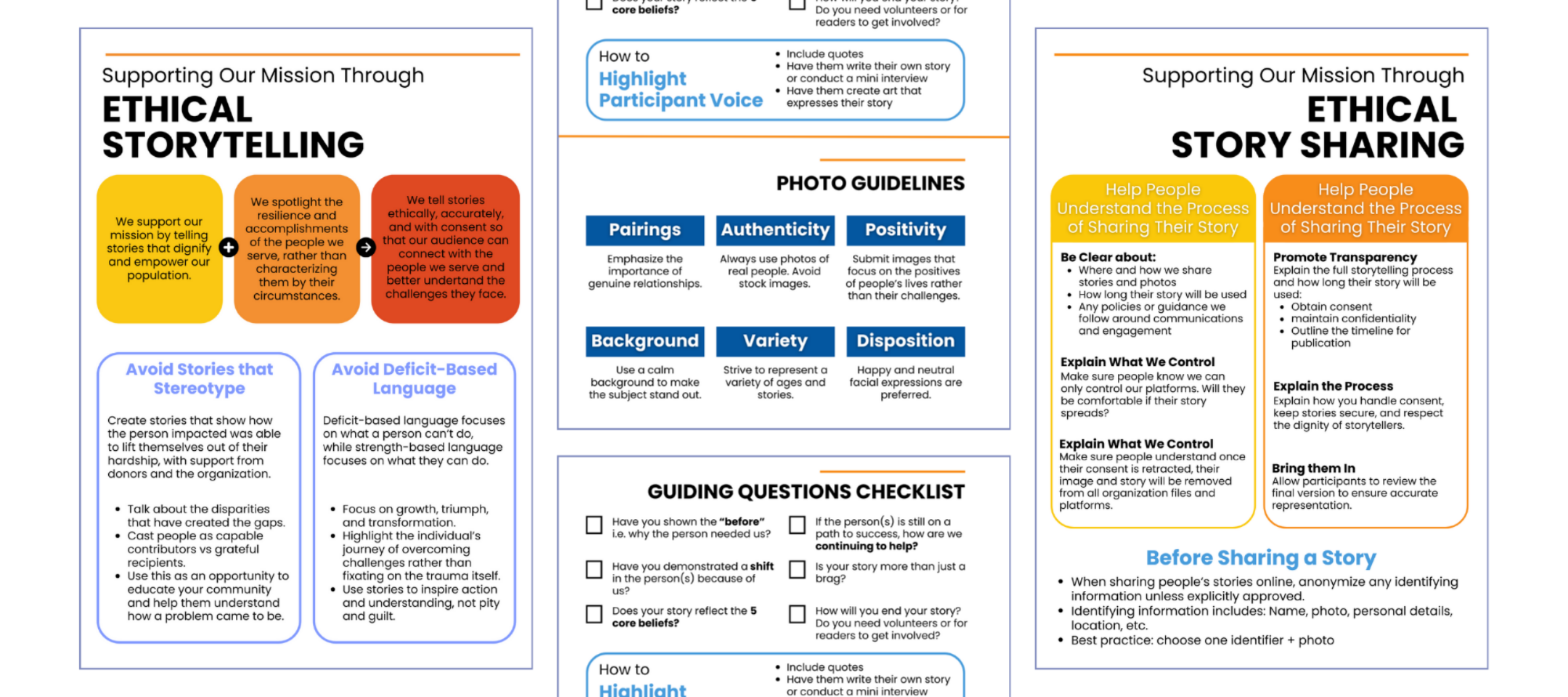
Ethical Storytelling and Messaging for Non-Profit Organizations
Ethical Storytelling & Messaging Guide
✳︎
Canva
✳︎
Google Docs
✳︎
SWOT Analysis
✳︎
UX Design
✳︎
Audience Analysis
✳︎
Presentatio
✳︎
Ethical Storytelling & Messaging Guide ✳︎ Canva ✳︎ Google Docs ✳︎ SWOT Analysis ✳︎ UX Design ✳︎ Audience Analysis ✳︎ Presentatio ✳︎
Context
I was a Development Associate for a non-profit and while creating blog and social media content for my organization, I identified significant gaps in how stories and images were collected, reviewed, and approved for publication. The organization relied on a centralized content-submission model in which over 150 staff members across 52 schools contributed photos and impact stories, operating under the assumption that photo release forms and ethical considerations had already been addressed.
As I revisited old materials for a new campaign, it was discovered that many images lacked verified consent or included individuals who were not formally connected to the organization’s programs. This opened the door for complete content audit.
Problem
The ethical stakes were high given the organization’s work with high-risk populations, requiring strict adherence to privacy, consent, and data protection standards. These challenges exposed many ethical, legal, and reputational risks for the organization:
Misuse of images could damage trust with students, families, donors, and the broader community.
A large archive of previously published content could not be assumed safe to reuse.
Campaign timelines conflicted with the need to audit older materials.
Additionally, stories submitted by well-intentioned staff often varied widely in quality and completeness, omitted critical information such as donor recognition, included too much personally identifying information, and/ or used deficit-based language and portrayals for people of color.
While these portrayals reflected broader cultural assumptions rather than intentional bias, they carried meaningful implications in a nonprofit context where donors hold significant narrative power over the populations served.
These issues were not the result of negligence, but of unspoken norms, inconsistent processes, and a lack of shared guidance around ethical storytelling.
Approach & Design Choices
SWOT Analysis
I conducted a SWOT analysis alongside my department that informed the creation of an Ethical Storytelling and Messaging Guide.
Strengths
Strong organizational mission and storytelling culture
High volume of authentic stories and images from staff
Leadership open to improving ethical practices once risks were identified
Weaknesses
Assumptions about consent compliance rather than verified records
Inconsistent storytelling quality
Limited staff training in ethical communication
Large archive of content that could not be safely reused without review
Opportunities
Development of an ethical storytelling and messaging guide to standardize practices across the organization
Empower non-marketing staff to make ethical decisions independently
Improved trust and credibility with community partners
Threats
Legal and compliance risks associated with improper consent and privacy violations
Erosion of trust among high-risk populations and their families
Staff resistance to change if new guidelines were perceived as punitive or restrictive
My approach was rooted in the understanding that many staff members were not trained communicators and had never been asked to consider how audience, culture, and scale shape the impact of public-facing storytelling.
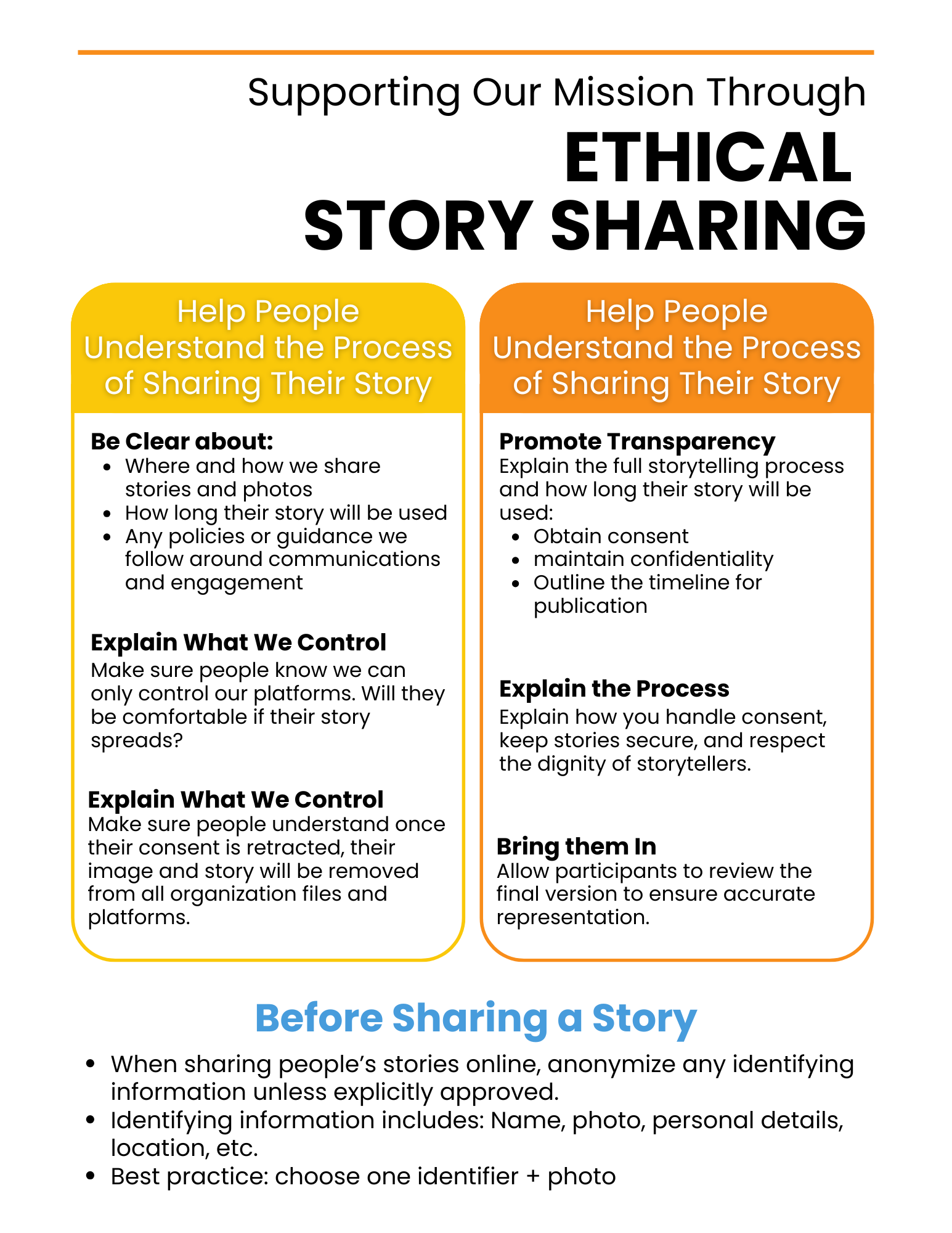
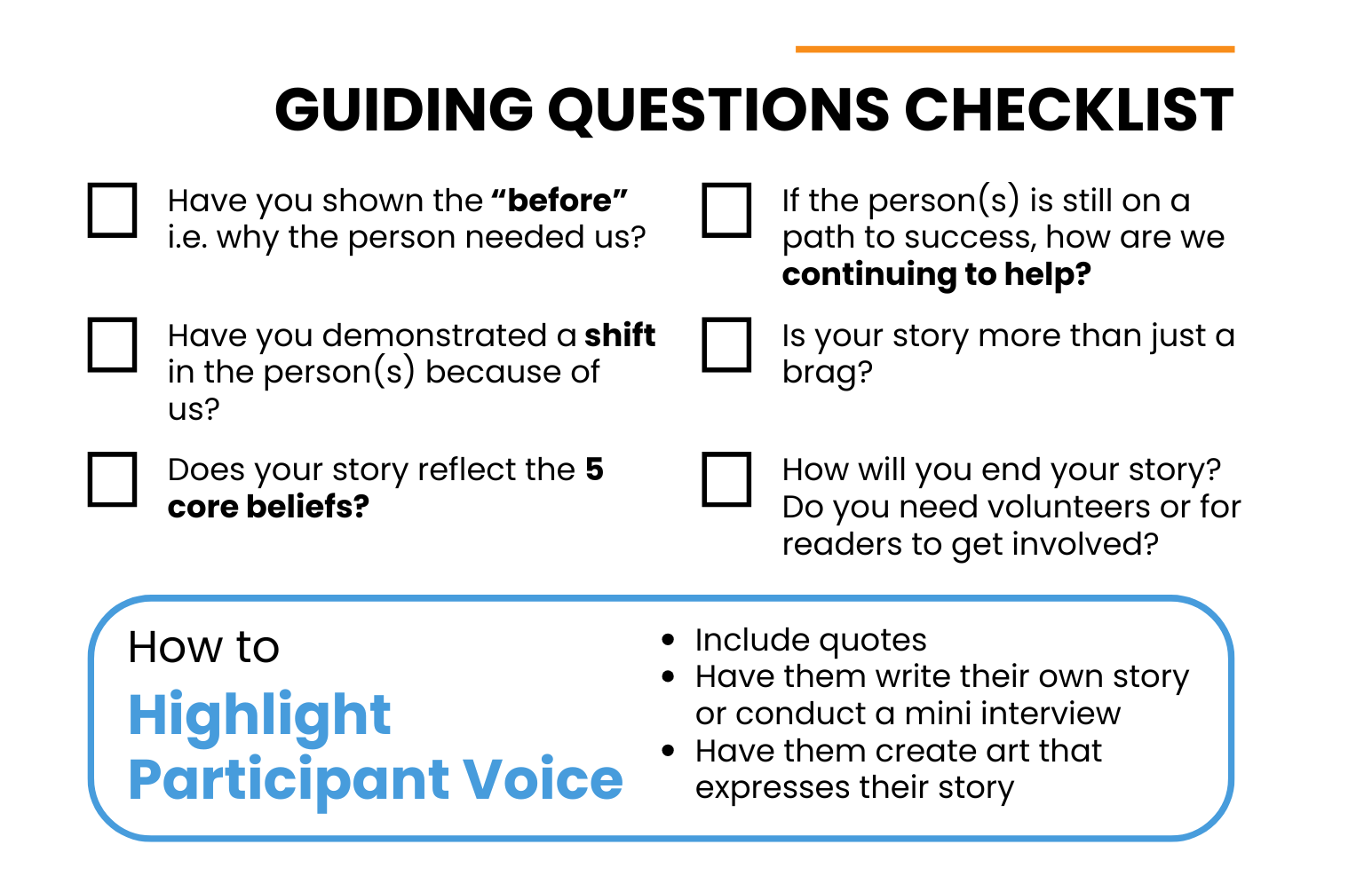
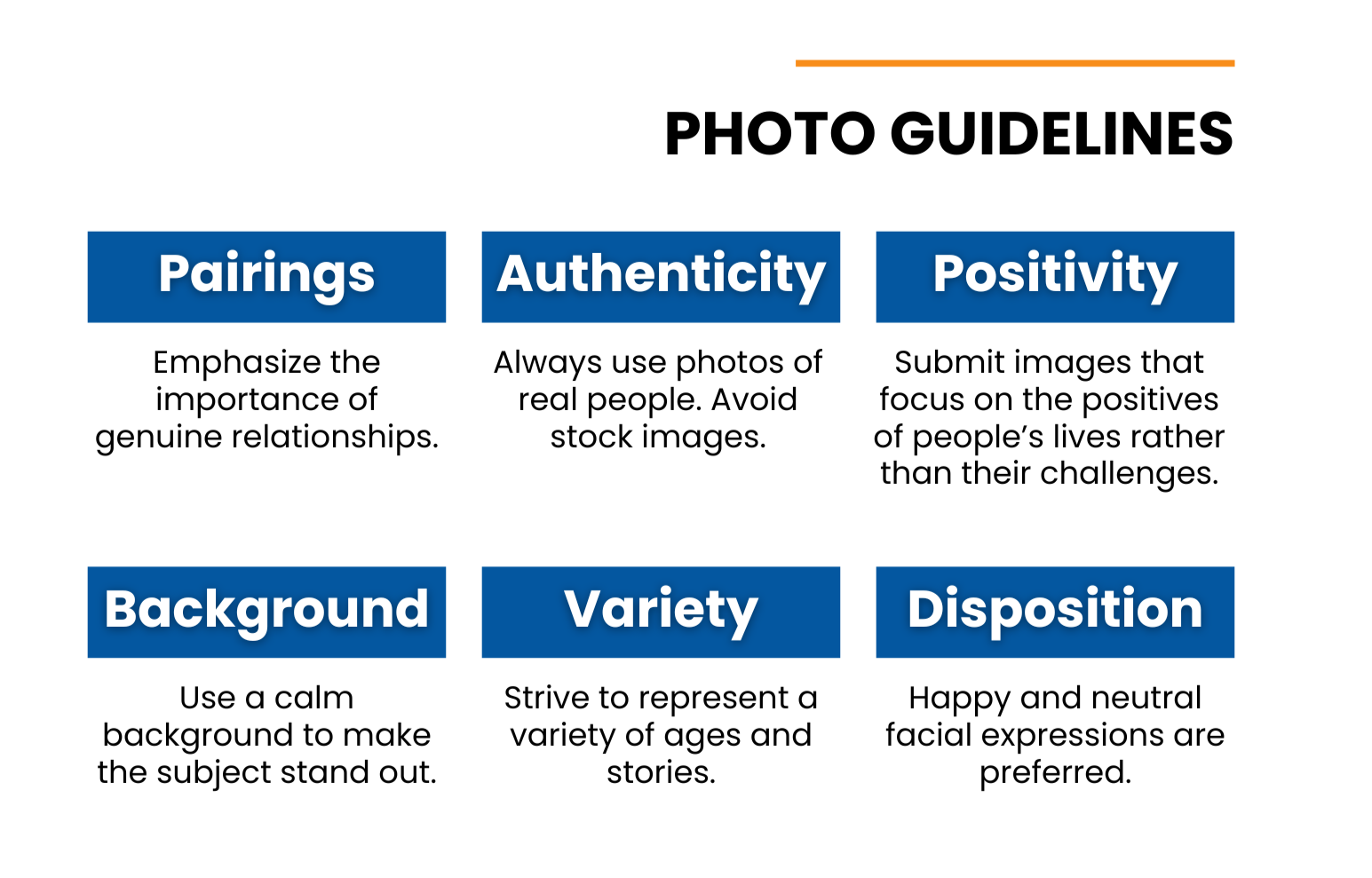
Training had to be accessible for non-marketing staff and avoid assigning blame or creating resistance. The guide also needed to be intuitive so staff could understand ethical standards without extensive training. So, I decided to include checklists, visuals, and emphasize shared responsibility and dignity-centered representation.
The guide and training also needed to address how cultural context, power dynamics, and audience perception influence storytelling.
Staff Training Objectives
After engaging with the Ethical Storytelling and Messaging Guide and accompanying presentation, staff will be able to:
Consistently obtain, document, and verify informed consent for all photos and stories prior to submission or publication.
Apply ethical and respectful storytelling principles that preserve dignity, agency, and accuracy.
Evaluate content for completeness and alignment, ensuring stories are accurate, mission-driven, and include all elements.
Distinguish between appropriate and inappropriate content when working with sensitive personal information.
Training & Implementation
To ensure consistent adoption of the Ethical Storytelling and Messaging Guide, I led an organization-wide training for over 200 staff members.
Situating My Role
Because many staff members only knew me through email, I began the session by situating my role within the organization and explaining how their submissions connected to broader communications, donor engagement, and public visibility.
Acknowledging the common divide between central office and school-based staff, I explicitly emphasized that my goal aligned with theirs: to protect our high-risk population, honor their dignity, and ensure they were well represented.
I used anonymized examples to demonstrate common ethical pitfalls in unverified consent and oversharing, incomplete impact stories, or imagery that unintentionally compromised dignity.
Consequences of Oversharing
Real World Scenarios
Stories and images can circulate far beyond their intended audience.
A social media post intended for a limited audience was reshared through broader channels and gained significant reach. Because it included excessive personal details, it compromised the anonymity of someone who needed protection.
Small Omissions Limit Recognition
Missing information can limit relationship-building opportunities.
Impact stories occasionally referenced donations without capturing donor information. This prevented proper acknowledgment and limited the organization’s ability to pursue future engagement.
Best-Practice Questions
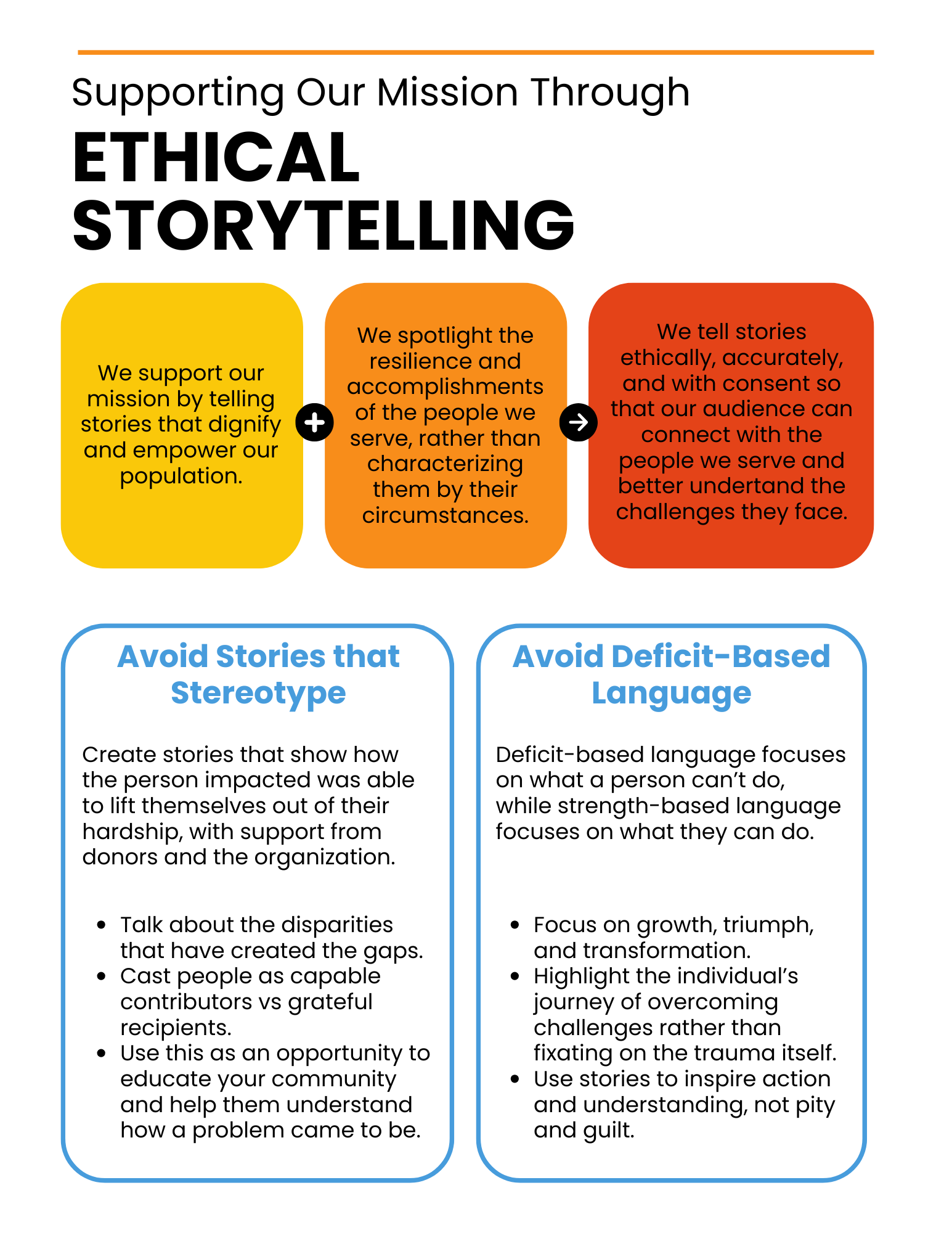
Population Portrayal Influences Perception
Consider cultural context and language when sharing content publicly.
Some content included images or language that, while not intentionally harmful, could present our population in undignified or culturally insensitive ways or frame them through a deficit lens.
Throughout the training, I reinforced that ethical storytelling is a learned practice shaped by context, audience, and culture. I encouraged staff to ask themselves some self-guiding questions such as:
“Would I be comfortable if this image represented myself or someone I know?”
“Does this story highlight strength and agency, or dependency and need?”
“How might cultural background, race, or socioeconomic status shape how this story is interpreted?”
This framing helped staff understand how much detail to include and consider how their stories might be received by families, donors, and the public.
Response to Resistance
Concerns arose about staff members’ perceived storytelling or writing ability and rather than positioning them as responsible for producing polished narratives, I clarified that story shaping and editing was my role as a communications professional.
What I needed from staff was not literary skill, but accurate and complete information and ethical awareness.
Outomes & Impact
The Ethical Storytelling and Messaging Guide led to qualitative improvements in ethical awareness and communication practices such as:
Standardized storytelling practices across the organization.
Reported staff confidence boost in creating content.
Staff submitting more complete, respectful, and mission-aligned stories and images.
By framing ethical storytelling as a learning opportunity, staff grew into more ethical communicators within a complex, high-stakes environment.
Reflection
The initial issue was a lack of shared understanding and structure which resulted in well-intentioned people making decisions that introduced serious ethical and legal risk.
From a UX perspective, this project emphasized the importance of designing for non-experts. Staff were not marketers or content strategists, so the guide had to work for people with limited time and varying comfort levels. Designing the guide as a modular, checklist-driven resource was a deliberate choice to reduce cognitive load and encourage adoption.
Presenting the guide to all 200 staff members also highlighted the value of contextual training. Walking through real examples helped normalize mistakes without assigning blame and created shared language around what ethical storytelling looks like in practice. This approach increased buy-in and reduced resistance to change.
Overall, this project strengthened my belief that ethical, user-centered design can protect both organizations and the people they serve. The success and acceptance of the guide validated the decision to prioritize clarity and usability over exhaustive documentation.